
Colposcopy: What to Expect, When it is Needed and What the Results Mean 

Everything you need to know about colposcopy, what it entails, when you might need one, how to prepare, interpretation of results and when follow-up treatment may be needed.

What is Colposcopy?


Colposcopy is an examination of the cervix (neck of the womb) and vagina to detect abnormalities or precancerous changes.

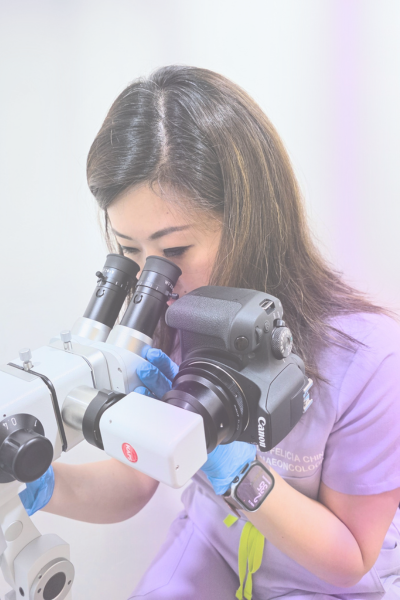
The procedure is conducted by an accredited colposcopist, and involves using a colposcope, which is a specialised instrument similar to a lighted magnifying glass. The colposcope does not enter the body; it stays outside the vagina and magnifies the cervix so the doctor can study the cervix in greater detail.

Colposcopy is usually performed in a clinic setting, but may be performed as a day surgery procedure.

When do I need Colposcopy?


Colposcopy is most commonly recommended after:

  • Abnormal results from Pap smear or HPV test
  • Unexplained vaginal bleeding, especially after sexual intercourse
  • Visible changes (e.g. unusual growth, inflammation, lesions) seen on cervix or vagina
  • Follow-up of pre-cancerous changes on the cervix or after previous treatment for cervical or vaginal abnormalities

If you have recently received an abnormal cervical screening result, your doctor may refer you for colposcopy for further evaluation.

What happens during Colposcopy?


Colposcopy typically takes no longer than 10 minutes. During a diagnostic colposcopy, a speculum is gently inserted into the vagina to hold the vaginal walls apart. A colposcope is used to study the cervix and vagina, and record images or videos.

Two solutions are commonly applied during the procedure:

  • Acetic acid (vinegar solution): Highlights abnormal cells by turning them white.
  • Lugol’s iodine: Helps identify areas that may lack normal glycogen-containing cells.

You may experience mild tingling when the solutions are applied.

If an abnormality is seen, a biopsy may be taken, where a tiny piece of tissue (between 3mm and 5mm) is retrieved. During the biopsy, you may experience a quick sting or pinch. Occasionally, a sample from the cervical canal (endocervical curettage) may also be taken.

Pain experienced is usually minimal, and most people can return to normal activities immediately after the procedure. A brown paste (Monsel’s paste) is used to stop the bleeding. This will typically leave a dark discharge for a few days.

The tissue sample will be sent to a laboratory for histological analysis, and results will usually be available in 1 to 2 weeks.

Does Colposcopy hurt?

Most patients describe colposcopy as similar to a PAP smear. You may experience some discomfort, but there is usually minimal pain.

Common sensations include:

  • Mild pressure from the speculum
  • A slight stinging sensation from the acetic acid and/or Lugol’s iodine
  • A quick sting or pinch and brief cramping if a biopsy is taken

How to prepare for Colposcopy

  • Avoid scheduling colposcopy during the menstrual period
  • If required, consume the painkillers provided by your doctor 2 hours before the procedure
  • Inform the clinic if you might be pregnant, are taking blood thinners, bleed easily, or are allergic to iodine or latex

What are the risks and possible complications?

A colposcopy is generally considered a safe procedure. You may experience mild discomfort during the procedure and light spotting for a day or two. Some patients may also experience fainting spells immediately after the procedure, and require rest before resuming normal activities.

If a biopsy is taken, heavier spotting may be expected, with brown or black discharge from the Monsel’s paste used. Very rarely, patients may acquire an infection requiring oral antibiotics, or heavy bleeding that requires further treatment.

After care tips

You can resume normal activities immediately after the procedure. Sanitary pads should be used instead of tampons until the bleeding stops, and over-the-counter painkillers can be taken if you experience any pain or cramping.

Contact your doctor if you:

  • Experience bleeding which exceeds 2 sanitary pads in an hour
  • Develop discharge with a foul smell
  • Develop a fever of over 38 °C
  • Experience intense pelvic pain

Should I be worried?

It is important to note that most women are not diagnosed with cancer at this stage, even if abnormal cervical cells are uncovered. Cervical cancer takes years to develop. Therefore, especially if you have been screened regularly, mild abnormalities may not require immediate treatment.

Understanding Colposcopy biopsy results

Colposcopy results fall into several categories depending on what the clinician observed and whether a biopsy was taken. Your doctor will explain the results to you in detail.

Normal (Negative) Result

A normal result means that no abnormal cells were found. In this case, no treatment is needed but you may require follow-up.

Abnormal result: CIN grading

If abnormal cells are found, they are classified using the cervical intraepithelial neoplasia (CIN) grading system:

CIN 1 (mild dysplasia):

Low-grade changes that often resolve on their own. Monitoring rather than immediate treatment is typically recommended.

CIN 2 (moderate dysplasia):

Intermediate changes that may require treatment, depending on individual circumstances, as well as ongoing monitoring.

CIN 3 (severe dysplasia):

High-grade changes that carry a higher risk of developing into cervical cancer if left untreated. Treatment is usually recommended.

Important: CIN represents pre-cancerous changes and does not equate to cervical cancer. Through detection of such cells, early intervention and effective treatment can commence before cancer develops.

Abnormal result: Cancer

Sometimes, a biopsy may detect cervical cancer, which requires prompt specialist care. Your doctor will explain your results and recommend appropriate follow-up or treatment.

Importance of Colposcopy in Cervical Cancer prevention

Cervical cancer develops slowly over many years, often beginning with precancerous cell changes caused by persistent HPV infection. Regular screening with PAP smears and HPV testing allows these changes to be detected early. Colposcopy is a critical next step in evaluation, enabling a detailed examination of the cervix, which helps assess if treatment is needed. Treatment of cervical dysplasias (precancerous changes of the cervix) allows for the prevention of cervical cancer. The aim is to remove the abnormal cells while preserving as much cervix as possible. This is safely achievable through a minor day surgery procedure.

With proper screening and follow-up care, cervical cancer is one of the most preventable cancers.

Key takeaways

  • A colposcopy is a safe, outpatient examination of the cervix using a magnifying instrument.
  • The procedure is quick, safe, and usually causes minimal discomfort.
  • Colposcopies are typically recommended after an abnormal results from a PAP smear or HPV test, to further examine any abnormal cells present
  • A biopsy may be taken during the procedure and sent to the laboratory for analysis.
  • Results are graded using the CIN system, and not all abnormal results require immediate treatment.
  • Early detection through colposcopy allows effective treatment of precancerous cells and is instrumental in the prevention of cervical cancer.

If you have been recommended this procedure and have any, an accredited gynaecologist can guide you through the process and ensure you feel informed and supported.

The above information is intended for educational purposes only and does not constitute medical advice. Always consult a qualified healthcare professional for diagnosis and treatment.

Scroll to Top